Science
How ARC measures.
A closer look at optical, motion and temperature sensing, and how ARC turns those signals into personal trends.
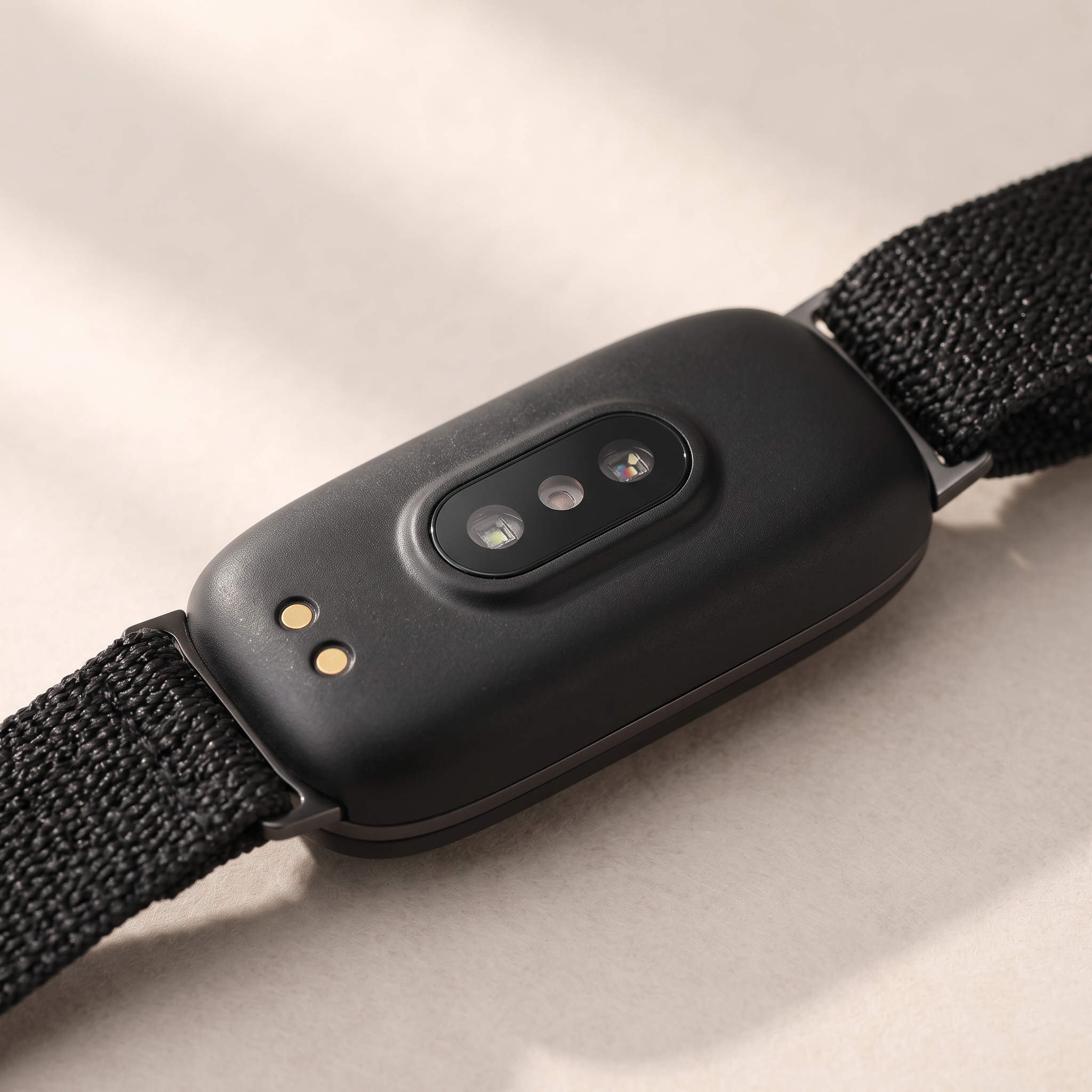
What ARC measures
From signals to useful trends.
ARC combines optical, motion and skin-temperature sensing in a screenless form designed for continuous everyday wear. The sensor configuration continues to be refined.
Optical sensing
ARC’s optical system uses multi-wavelength PPG hardware to observe pulse-related changes at the skin.
Heart rate
Heart-rate estimates would be derived from optical pulse signals with motion compensation. Performance can vary with fit, movement, skin contact and activity type.
Heart-rate variability
HRV trends would be calculated from beat-to-beat timing during suitable low-motion periods. ARC would emphasize personal trends rather than isolated readings.
Motion sensing
Accelerometer and gyroscope data support movement, workout and sleep estimation. Activity classification performance depends on validated algorithms and supported activity types.
Skin temperature trends
Temperature sensing is intended to show deviations from an individual baseline. It is not intended to diagnose fever, infection or illness.
Sleep estimation
Sleep duration and estimated stages would be inferred from movement and physiological signals. Consumer sleep staging is an estimate and should not be presented as a clinical sleep study.
Personal baselines
ARC is designed to compare current measurements with a user’s own history so daily context reflects that person’s typical range.
Algorithm development
Signal processing and scoring methods are designed to combine physiological and motion signals into useful personal trends across rest, sleep and activity.
Data processing
ARC documentation explains device, app and cloud processing where it matters for product operation and privacy.
Product testing
ARC testing covers sensing stability, everyday wear conditions, environmental behavior and reference comparisons.
Limitations
Wearable measurements can be affected by fit, motion, skin contact, environment and individual physiology. ARC is intended for general wellness and fitness, not diagnosis or treatment.
Product testing
How ARC is evaluated.
Bench testing
Confirm hardware behavior, battery performance, sensing stability and environmental limits.
Representative wear testing
Evaluate fit, motion conditions, skin contact and everyday use across a broad range of people and activities.
Reference comparison
Compare relevant measurements against appropriate reference methods across defined test conditions.
Document performance
Describe supported use cases, measurement behavior and known limitations in practical terms.
Medical positioning
General wellness, unless future authorization says otherwise.
ARC Band is intended to support general wellness and fitness. It is not intended to diagnose, treat, cure or prevent any disease or medical condition. People with medical concerns should seek qualified medical care.